The fields of genetics and AI might seem worlds apart, but a closer examination reveals surprising parallels, particularly in the context of generative AI models. Just as biological systems evolve and adapt through genetic diversity, AI models “evolve” through iterative training processes. However, both systems face significant risks when diversity is compromised, leading to potential collapse.
DNA and Training Data as Blueprints
In biology, DNA serves as the blueprint for all living organisms, encoding the instructions needed to build and sustain life, including traits, behaviors, and adaptability. Genetic mutations introduce variation within a population, which is essential for evolution. While some mutations can be harmful, others lead to beneficial adaptations that improve a species’ chances of survival.
Similarly, in generative AI, training data acts as the blueprint for the model, guiding its output generation, predictions, and adaptability to new inputs. Variations introduced during iterations and model updates can either enhance the model’s performance or result in novel outputs. However, the quality of this “genetic material” — the data — is crucial. Just as harmful mutations in DNA can lead to genetic disorders, poor-quality data can cause AI models to develop errors or biases.
Inbreeding and Model Collapse
In genetics, traits are passed down through generations, allowing for the accumulation of beneficial adaptations. However, this process also carries the risk of inheriting harmful mutations. In small or isolated populations, this can lead to inbreeding, where a lack of genetic diversity results in an accumulation of defects.
A similar risk exists in generative AI. When models are repeatedly trained on the outputs of other models or a narrow set of data, they can experience a form of “inbreeding” — where the lack of diversity in training data leads to increasingly repetitive, biased, or flawed outputs. This phenomenon, known as model collapse, can significantly diminish the effectiveness of AI systems.
Comparing the Metrics
To illustrate this, we can compare the impact of inbreeding over multiple generations to findings from a recent paper published in Nature on generative AI.
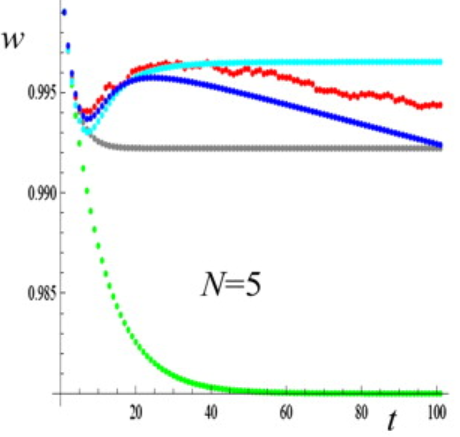
Population Mean Fitness measures the average reproductive success of a population. High fitness indicates a healthy, diverse population well-adapted to its environment, while low fitness suggests inbreeding depression and loss of genetic diversity.
Perplexity is a metric used to evaluate language models, reflecting how well a model predicts a sample. Low perplexity indicates confident and accurate predictions, while high perplexity suggests the model struggles — which can occur if the model is overfitted or lacks diversity in its training data.
This graph, reproduced from a publication by Garcia-Dorado et al., illustrates the decline in population fitness as a function of generation in a population experiencing inbreeding.
This graph, reproduced from the Nature paper, shows the increase in perplexity as a function of generation in an AI model trained on increasingly synthetic data.
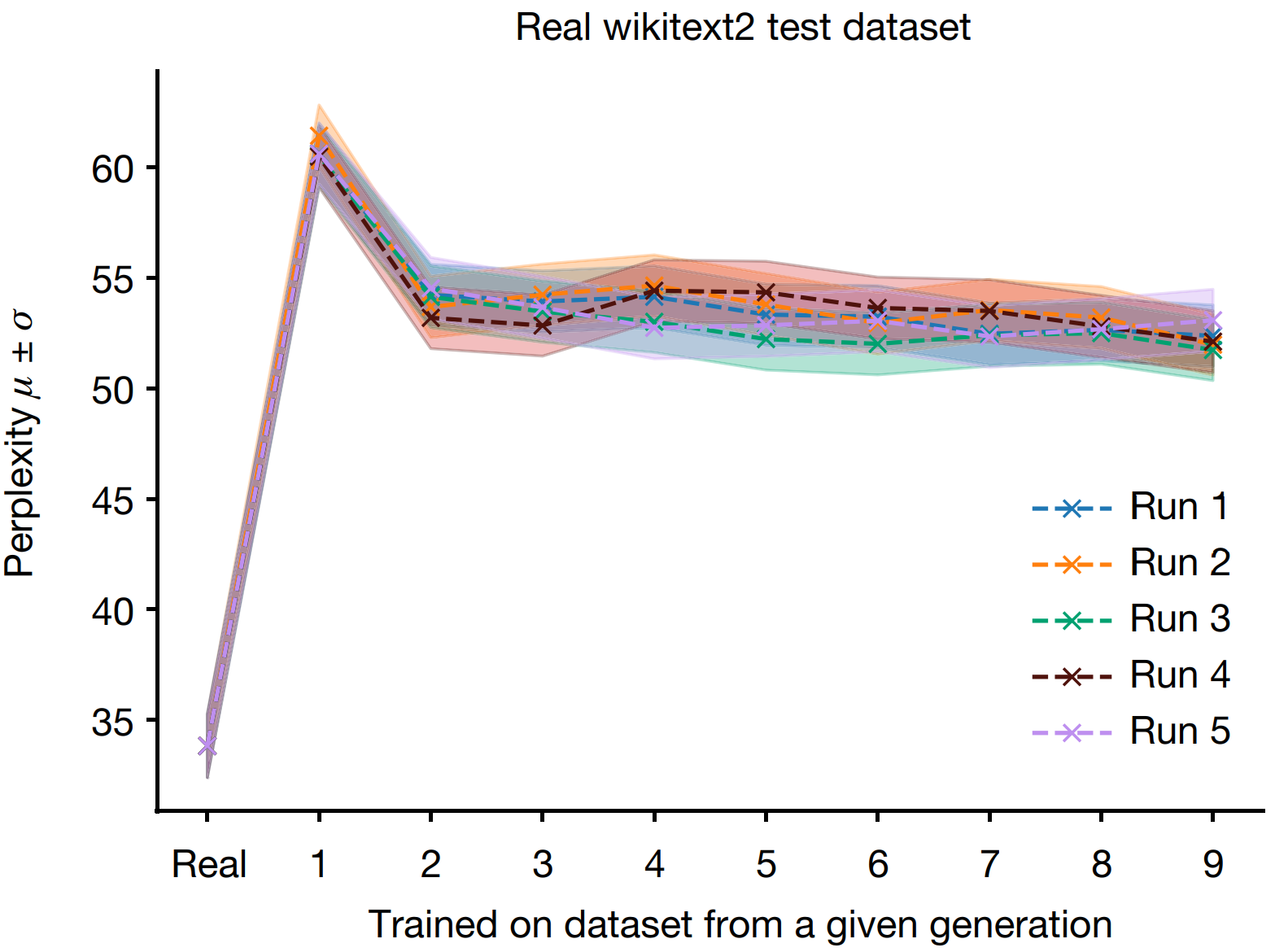
Although fitness and perplexity correlate oppositely with diversity in their respective fields, the analogous graphs show a similar trend: in both cases, a mechanism akin to “natural selection” helps mitigate the adverse effects of reduced diversity.
Key Takeaways
By recognizing these parallels, we can devise strategies to prevent model collapse and enhance the resilience of AI systems:
- Prioritize diverse and representative training data
- Implement careful iteration that mirrors evolutionary pressure
- Monitor for subtle performance degradation over training generations
- Explore new techniques that mirror evolutionary processes
Incorporating these insights will not only improve the quality of AI systems but also contribute to building models that are both equitable and sustainable in the long term.